Whatsapp
CNC 5 Axis Bridge Saw machines represent the pinnacle of multi‑axis cutting technology in stone, glass, metal, and composite fabrication. In this article, we examine every aspect—from extended keyword queries to practical usage, pros & cons, and FAQs—designed to help professionals and buyers evaluate their needs clearly. This comprehensive guide includes optimized anchor titles, structured outlines, and detailed insights solidified by industry references and use‑case analysis.
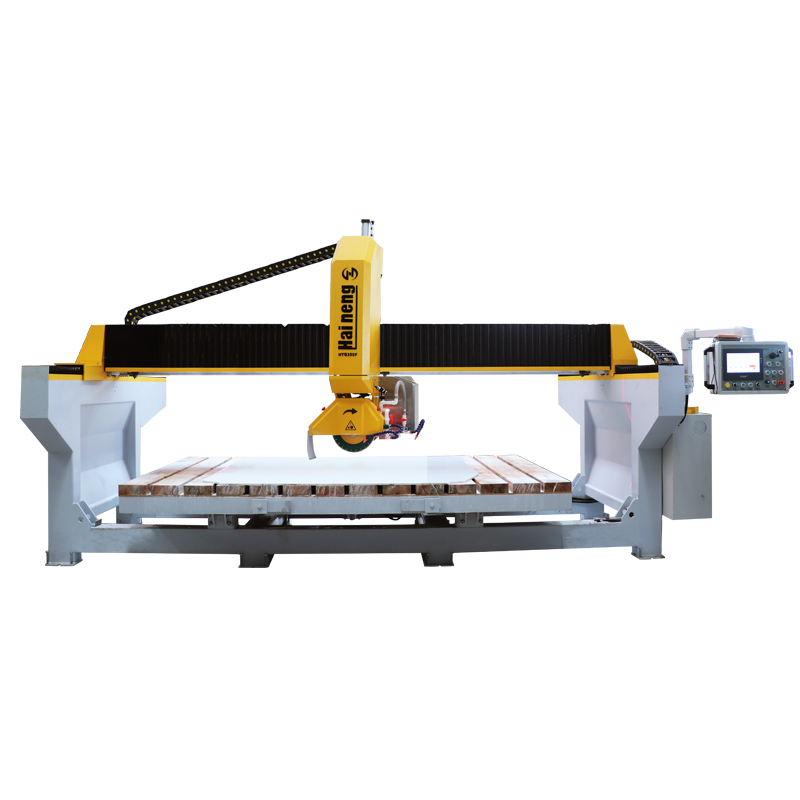
A CNC 5 Axis Bridge Saw is a computer‑numerically controlled cutting machine that operates along five independent axes. This allows complex angle cuts, intricate shapes, and precise finish standards. Offered by leading manufacturers like Quanzhou Xinhaineng Machinery Co.,Ltd., these systems deliver unmatched flexibility compared to traditional saws. They are widely used in countertop fabrication, architectural stone projects, and industrial cutting workflows.
These systems combine mechanical movement and programmed control. Six major components coordinate: a bridge frame, spindle, rotating head, gantry, and two or more controlled axes that move simultaneously. The CNC controller interprets G‑code to instruct movement on X, Y, Z, and swivel axes, enabling complicated geometric cuts with high accuracy.
5 Axis Bridge Saws cut:
| Aspect | Advantages | Disadvantages |
|---|---|---|
| Precision | Highly accurate with complex geometry | Requires skilled setup and calibration |
| Productivity | Reduces cycle time and human error | Higher initial cost than basic CNC saws |
| Flexibility | Can handle bevels, curves, and multi‑axis cuts | Software complexity can increase training needs |
| Automation | Supports integration with CAD/CAM workflows | Maintenance costs may be higher |
When evaluating options, consider:
What industry uses a CNC 5 Axis Bridge Saw most often?
The stone fabrication and architectural cladding industry use 5 Axis Bridge Saws extensively due to the need for bevels, miters, and precision cuts on thick slabs.
Can a CNC 5 Axis Bridge Saw cut metal?
Yes—when equipped with the correct blade and coolant, it can cut aluminum, non‑ferrous metals, and composites with fine tolerances.
What software is compatible with these machines?
Most support mainstream CAD/CAM software like AutoCAD, SolidWorks, and specialized stone cutting software with direct G‑code export.
Is training required to operate a CNC 5 Axis Bridge Saw?
Yes. Due to multi‑axis programming and setup, operators need training in both software and machine operation to maximize safety and performance.
How does maintenance affect machine uptime?
Regular maintenance—lubrication, spindle checks, axis calibration—ensures optimal uptime and accuracy, reducing downtime over extended production cycles.
Does Quanzhou Xinhaineng Machinery Co.,Ltd. offer customization?
Yes, custom configurations for specific production needs are available to optimize workflow and integrate automation solutions.
Understanding the CNC 5 Axis Bridge Saw ecosystem—including operational fundamentals, practical pros and cons, and strategic selection criteria—empowers manufacturers to invest wisely. Whether for stone fabrication, architectural projects, or precision industrial cutting, these machines deliver value and performance when correctly applied.
For personalized consultations, detailed quotations, and expert recommendations tailored to your production requirements, Quanzhou Xinhaineng Machinery Co.,Ltd. stands ready to support you. Contact us today to optimize your workflow with cutting‑edge CNC solutions!